Technology
Photonic Computing
Light-based processors using photons instead of electrons for ultra-fast, energy-efficient computation and AI inference.
91 companies
Explainer
Photonic Computing explained
Photonic computing uses light instead of electricity to carry or process information. Photons have no charge, so light in a waveguide does not cause the resistive heating that current in a wire does, though lasers and modulators still use power, and many wavelengths can share one waveguide. The industry has two quite different parts: moving data with light, and computing with light.
Moving data with light is established. Silicon photonics puts lasers, modulators and detectors on chips and is used in optical transceivers. Computing with light is earlier. Some designs use interference in a network of waveguides to do matrix multiplication, the core operation in neural networks, using very little energy per operation.
How it differs from the usual approach
Electronic chips compute with transistors that switch on and off. Optical computing is mostly analog: the answer comes from how light waves combine, so precision is limited by noise and is usually in the range of a few bits to around eight. Light is also hard to store and hard to make interact, so there is no practical optical equivalent of a memory or a general-purpose logic gate. Practical photonic chips therefore convert between electrical and optical signals, and that conversion can use much of the energy saved.
Where it is used
- Optical transceivers linking servers and switches in data centers.
- Co-packaged optics that put optical engines in the same package as switch and processor chips.
- Accelerating matrix maths for AI inference in research and early products.
- LiDAR and optical sensing.
- Specialised optical processors for signal processing and optimisation problems.
What to watch
- The nearest commercial impact is in optical links between chips and racks, not in replacing processors.
- Photonic interconnect for AI clusters is further along in reaching products than photonic computing.
- Photonic matrix accelerators still have to show an advantage after counting conversion, control and packaging costs.
- Whether optical computing can reach the precision and scale needed for large AI models is not settled.
Frequently asked questions
What is photonic computing?
It is computing that uses light in place of, or alongside, electrical signals. In practice the term covers optical data links, which are already in use, and optical processors for matrix maths, which are still early.
Are optical computers faster than electronic ones?
Light travels fast, but speed is not the main benefit. The appeal is low energy per operation and high bandwidth. Converting between electronic and optical signals, and limited precision, reduce the gain.
Is silicon photonics the same as photonic computing?
No. Silicon photonics is a manufacturing platform for optical chips. It is mostly used today for communication, and some companies use it to build photonic computing chips as well.
- OptQC OptQC develops photonic quantum computers, which use particles of light as the carriers of quantum information rather than superconducting circuits or trapped atoms. The company says this approach offers good scalability and energy efficiency and fits well with optical communications. It is headquartered in Tokyo, in the Toshima ward. Its website names Kan Takase as chief executive and Noriaki Iwata as chief operating officer, and describes an industry hub called HIQALI for optimisation, AI and machine learning uses. Quantum Computing · Photonic Computing 1.5B yen Series A1 (Oct 2025)

- QuiX Quantum QuiX Quantum builds photonic quantum computers, which use particles of light as qubits and route them through chips instead of through large optical tables. Its products include Carina, which the company describes as a universal system, and Alqour 2.0, a programmable photonic processor for research. A photonic processor steers light through a network of tiny waveguides etched in a chip, so interference between photons does the calculation. The company lists offices in Enschede and Amsterdam in the Netherlands and in Stuttgart and Ulm in Germany. Quantum Computing · Photonic Computing €15M Series A (Jul 2025, co-led by Invest-NL and EIC Fund; total ~€24M)

- Arago Arago is a Paris startup designing a processor for AI workloads that does part of its computation with light instead of electrical signals. Light generates less heat than current in transistors, and the company says this could cut energy use per task. Its first chip, codenamed JEF, is meant to run models written in standard AI software frameworks. Arago was founded in 2024 by Nicolas Muller, Eliott Sarrey and Ambroise Muller, and in July 2025 it closed a seed round co-led by Earlybird, Protagonist and Visionaries Tomorrow. Photonic Computing · AI Accelerators $26M seed (Jul 2025)

- Scintil Photonics Scintil Photonics, based in Grenoble, France, makes light sources for optical links in AI data centers. Its LEAF Light product is a single chip that combines several lasers, each at a precisely spaced wavelength, so one fibre can carry many data channels in parallel. This approach is called dense wavelength division multiplexing. The company builds it on its own silicon photonics platform, which grew out of research at CEA-Leti, and it works with the foundry Tower Semiconductor on manufacturing. Photonic Computing · Interconnect & Networking $58M Series B (Sept 2025, Yotta Capital/NGP/NVIDIA)

- II-VI/Finisar (now Coherent) Coherent Corp. was known as II-VI Incorporated until it took the name of laser maker Coherent, Inc. after acquiring it in 2022. It makes optical materials, lasers and semiconductors, including vertical-cavity surface-emitting lasers (VCSELs) and silicon carbide substrates. It also owns the Finisar optical business bought in 2019, which supplies optical components for data networks. Carl Johnson and James Hawkey founded the company in 1971, and it is headquartered in Saxonburg, Pennsylvania and listed on the NYSE as COHR. Photonic Computing · Custom Silicon —

- DSDenseLight Semiconductors DenseLight Semiconductors makes photonic components, which are chips that generate and handle light, for sensing and for datacom and telecom links. Its range includes superluminescent LED (SLED) modules, which emit broad-spectrum light used in optical sensing, along with distributed feedback (DFB) lasers, semiconductor optical amplifiers and gain chips. It also offers silicon photonics integration under its DPhi hybrid integration technology. The company operates as DenseLight Semiconductors Pte Ltd, a Singapore private limited company, with its address at Changi North Street 2. Photonic Computing · Custom Silicon —
- CACelestial AI Celestial AI developed the Photonic Fabric, an optical interconnect that moves data between chips and memory using light rather than copper wires. The aim is to give AI processors high bandwidth and low latency over longer distances, with less power loss. Marvell Technology announced that it had completed its acquisition of the company in early 2026, and Celestial AI's teams and technology now sit within Marvell's Data Center Group. The company was previously an independent startup based in Santa Clara, California. Photonic Computing · Interconnect & Networking Acquired by Marvell ($3.25B, Dec 2025)
- LLLightwave Logic Colorado developer of electro-optic polymer modulators for transceivers and co-packaged optics. In March 2026 it signed a development agreement with Tower Semiconductor to add its modulator designs to Tower's PH18 silicon photonics kit, with tape-outs planned in 2026 for 200G and 400G architectures, and its platform was added to a GlobalFoundries design kit through GDSFactory. It reported a tier-one customer targeting 1.6T transceivers at 200G per lane. Interconnect & Networking · Photonic Computing —
- Accelink Technologies Wuhan optoelectronic device maker, subsidiary of China Information Communication Technologies, listed in Shenzhen since August 2009. It showed 1.6T transceivers and LPO/LRO modules at OFC 2025 and in December 2025 filed a plan to raise up to RMB 350 million for high-speed optical transmission production and R&D. Interconnect & Networking · Photonic Computing —

- TETeramount Jerusalem developer of TeraVerse, a detachable self-aligning connector that attaches optical fiber to silicon photonics chips in co-packaged optics systems, using its PhotonicPlug and PhotonicBump technology. It raised $50 million in July 2025 in a round led by Koch Disruptive Technologies with AMD Ventures, Hitachi Ventures, Samsung Catalyst Fund and Wistron. Tower Semiconductor and GlobalFoundries are listed partners. Interconnect & Networking · Photonic Computing $50M, Jul 2025
- Ligentec EPFL spin-out (2016) offering silicon nitride photonic integrated circuit foundry services from Lausanne and France, adding lithium niobate modulators and III-V devices. In January 2026 it expanded a collaboration with X-FAB to offer XPH90 silicon photonics through its platform, and it is part of the EUR 48 million photonixFAB EU pilot line project. Interconnect & Networking · Photonic Computing —
- I(Inphi (now Marvell) Inphi designed high-speed chips that move data between servers, switches and optical links in data centers and telecom networks. It was not a processor maker, and its parts sat in the interconnect layer between compute and the network. Marvell completed its acquisition of Inphi on April 20, 2021, paying $66 in cash plus 2.323 Marvell shares for each Inphi share. The company no longer operates independently, and its products and brand have been folded into Marvell's data infrastructure and optical portfolio, so this record is best read as a historical entry. Custom Silicon · Photonic Computing —
- Lumentum Lumentum makes optical and photonic chips, components, modules and subsystems for cloud and networking equipment, plus lasers for industrial uses. Its products include optical circuit switches, which route light signals between fibres without converting them to electricity first, and are used in AI data centres. The company was spun off from JDSU, which renamed itself Viavi Solutions, and was founded on 1 August 2015. It is headquartered in San Jose, California. Photonic Computing · Interconnect & Networking —

- nEye Systems nEye Systems makes programmable optical circuit switches built on silicon photonics, aimed at AI data centers. An optical circuit switch steers beams of light between fibers directly, so traffic does not need to be converted to electrical signals and back at each hop, which can reduce latency and power use in large GPU clusters. The company was founded in 2020 and is headquartered in Emeryville, California. Its technology traces to the lab of Professor Ming Wu at UC Berkeley. Photonic Computing · Edge Computing $80M Series C (April 2026, Sutter Hill-led, $152M total)

- Xanadu Xanadu builds photonic quantum computers that encode information in light, using squeezed states and photonic chips rather than matter-based qubits. Its Aurora system is a modular, networked photonic machine, and the company also leads PennyLane, a widely used open-source library for quantum programming and machine learning. Xanadu was founded in 2016 and is based in Toronto, Canada. It completed a business combination with Crane Harbor Acquisition Corp. in March 2026 and now lists on Nasdaq and the Toronto Stock Exchange under the ticker XNDU. Quantum Computing · Photonic Computing $302M public listing (March 2026, Nasdaq/TSX: XNDU)

- GlobalFoundries GlobalFoundries is a contract chip manufacturer, or foundry, which makes chips designed by other companies rather than selling its own. It focuses on specialty processes such as FD-SOI, embedded MRAM and silicon photonics rather than the smallest leading-edge nodes. It was created in 2009 when AMD divested its manufacturing arm, and it listed on Nasdaq in 2021. The Mubadala Investment Company, a sovereign wealth fund of the United Arab Emirates, owns about 82 percent. Its headquarters is in Malta, New York, beside its main US fab, and it also operates plants in Dresden and Singapore. Custom Silicon · Photonic Computing · Interconnect & Networking —

- Q.ANT Stuttgart photonic computing company spun out of TRUMPF that sells the Native Processing Server, a plug-in photonic co-processor for AI and HPC. It raised a 62 million euro Series A in July 2025 (expanded to $80 million), unveiled its second-generation NPU 2 in November 2025 and agreed a four-year partnership with Jülich Supercomputing Centre. Photonic Computing · AI Accelerators $80M Series A, 2025

- iPronics iPronics, based in Valencia, makes programmable photonic chips. A photonic chip routes light through tiny waveguides, and iPronics arranges these in a mesh of tunable switches, much as an FPGA arranges reconfigurable logic, so one chip can be set up for different optical functions through software. Its SmartLight Processor began shipping to customers in 2023. The company was founded in 2019 as a spinoff of the Universitat Politecnica de Valencia, and it now also targets optical switching inside AI data centers. Photonic Computing · Interconnect & Networking €20M Series A (Jan 2025, led by Triatomic Capital)

- LILightIC LightIC is a China-based company listed as working on photonic in-memory computing with phase-change materials. Photonic computing uses light instead of electric current to carry out calculations, and phase-change materials are substances that switch between two physical states and can hold a value that light can read. This record needs checking against the company's own sources, since the name is also used by a silicon photonics lidar maker. Photonic Computing · In-Memory Computing —
- SiPhox Health SiPhox Health is better known as a health testing company than a computing one. It builds a benchtop blood analyser around a silicon photonic chip, which uses light guided through tiny channels etched in silicon to detect biomarkers in a small sample. The company also sells mail-in blood tests that use approved laboratory methods. The chip-based device has not been cleared by the US FDA and is used for research. SiPhox was founded in 2020 by Diedrik Vermeulen and Michael Dubrovsky, who met at MIT, and is based in Burlington, Massachusetts. Photonic Computing Series A2 ongoing (LongeVC)

- RedWave Labs Didcot-based electronics firm (incorporated 2004) that designs and manufactures custom control electronics with a photonics focus. Its quantum-related products include single-photon detector modules, QKD receivers, laser and temperature controllers, coil drivers and a PXIe time tagger. Quantum Computing · Photonic Computing —

- BluGlass BluGlass develops gallium nitride laser diodes using its proprietary remote plasma chemical vapour deposition process, which grows crystal layers at lower temperatures than conventional methods. It sells lasers for industrial, defense, quantum, biotech and scientific uses, and also offers foundry services. Its link to compute is as a source of compound semiconductor lasers rather than processors. The company is listed on the Australian Securities Exchange as BLG and has its head office in Silverwater, Sydney. Photonic Computing · Custom Silicon —

- Zhongji Innolight Chinese maker of high-speed optical transceivers for AI data centers, with 800G and 1.6T silicon-photonics modules in volume shipment. A brokerage note put 2025 revenue near RMB 38 billion, and the company reported H1 2026 revenue of about RMB 41.8 billion. It added a Hong Kong listing on 30 July 2026 alongside its Shenzhen listing. Interconnect & Networking · Photonic Computing —

- Fujikura Japanese cable and optical fiber maker supplying MPO/MMC multi-fibre connectors, ferrules and fiber cable for AI data centers. In March 2026 it decided to invest up to JPY 300 billion in Japan and the US to as much as triple optical fiber cable capacity; its information and communications segment grew 44.7% in the year to March 2026. Interconnect & Networking · Photonic Computing —

- LILightium Lightium is a Swiss foundry for photonic integrated circuits, which are chips that guide and modulate light. It works with thin-film lithium niobate, a material whose optical properties allow very fast modulators for optical communication and sensing. Lightium makes these chips on 200 mm wafers and offers a process design kit, a set of design rules for customers, in several wavelength bands. Access is currently limited to a closed beta programme. The company is headquartered in Schlieren, near Zurich, Switzerland. Photonic Computing —
- Dream Photonics Dream Photonics works on joining photonic components to electronics. Its offerings include photonic wire bonding, a technique that links optical chips with tiny printed polymer light guides, along with laser and fibre integration, facet-attached microlenses, process design kits and device IP. Its website lists locations in Vancouver, British Columbia, and Woodinville, Washington, and describes services rather than a fabrication foundry. Photonic Computing —

- Applied Optoelectronics Sugar Land, Texas maker of lasers and optical transceivers for data centers. It announced a $53 million 800G order from an unnamed hyperscale customer on 23 March 2026 and a further $71 million order on 2 April 2026, and said in its Q2 2026 results that demand exceeds capacity through mid-2027. Interconnect & Networking · Photonic Computing —

- RARanovus Ranovus designs optical engines that move data between chips in data centers using light. Its Odin engines combine a quantum dot laser, ring-shaped modulators that encode data onto the light, and photodetectors on a silicon photonics chip. The engines are aimed at pluggable optical transceivers and at co-packaged optics, where the optics sit beside the switch or processor chip to reduce power use. Ranovus was founded in 2012, works from Ottawa, and has named IBM, TE Connectivity and SENKO as packaging partners. Photonic Computing · Interconnect & Networking $100M+ Invest Ontario-backed expansion (Aug 2025)
- Aeva Technologies Aeva Technologies develops 4D LiDAR sensors based on frequency modulated continuous wave sensing, which measures both distance and instantaneous velocity. It integrates key LiDAR components onto a silicon photonics chip. Its products include the Atlas and Aeries lines, aimed mainly at automotive driver assistance and automated driving, with additional use in industrial automation and security. The sensors supply perception data to vehicle and robot compute stacks. Aeva is headquartered in Mountain View, California, and became publicly traded in 2021 through a merger with InterPrivate Acquisition Corp. Photonic Computing · ASICs —

- Enosemi Enosemi was a Silicon Valley start-up that designed photonic integrated circuits, which are chips that move data as light instead of electrical current. Its work supports co-packaged optics, a design that places optical links beside the processor package to shorten electrical paths and reduce power. AMD announced that it had acquired Enosemi in May 2025 and had worked with it before as a development partner. The price was not disclosed. Founders Ari Novack and Matthew Streshinsky joined AMD to support photonics work in future AI systems. The record should be treated as an acquired company rather than an independent one. Photonic Computing · Interconnect & Networking Acquired by AMD

- Avicena Avicena develops optical interconnects that link chips using microLEDs, tiny light-emitting diodes, in place of the lasers used in most optical links. Its LightBundle technology sends data in parallel over multicore fibre, with silicon photodetectors and custom transceiver chips at each end. The company says it supports links beyond 10 metres at low energy per bit, a claim not independently measured. Avicena is based in Sunnyvale, California, and in March 2026 it launched an evaluation kit for LightBundle. Photonic Computing · Interconnect & Networking $65M Series B (May 2025, Tiger Global led)

- Mbryonics Mbryonics makes optical communications hardware for satellites, in which laser links carry data between spacecraft and to the ground rather than radio. Its Starcom terminals are lightweight and power-efficient units for inter-satellite and Earth links. The range also includes the STARGATE optical ground station, STARLIGHT digital optical modems and TeraBIX, a radiation-hardened silicon photonic transceiver. The company has an Irish phone number and lists the European Space Agency, Intel and Viasat among the logos on its site, though it does not describe those relationships. Its website describes a vision of building the internet in space. Photonic Computing €17.5M EIC

- LightOn LightOn was founded in Paris in 2016 by Igor Carron, Laurent Daudet, Florent Krzakala and Sylvain Gigan. It first built an Optical Processing Unit, a co-processor that uses laser light scattered through a material to perform large random projections, a maths step used in some machine learning tasks. The company has since moved its main business to Paradigm, an enterprise generative AI software platform that can run on a customer's own systems. It listed on Euronext Growth Paris in November 2024. Photonic Computing · AI Accelerators €11.9M IPO on Euronext Growth Paris (Nov 2024)

- Quantum Source Weizmann Institute spin-off developing photonic quantum computers with millions of qubits using single atoms on photonic chips. Quantum Computing · Photonic Computing $77M ($50M Series A)

- Miraex Miraex builds thin-film lithium tantalate photonic integrated circuits, which are chips that guide light. The company aims to use them in transducers that convert signals between microwave and optical frequencies, so that superconducting quantum processors, sensors and networks could one day be linked over optical fibre. Its website places it at EPFL Innovation Park, with a footer address in Ecublens, Switzerland, near Lausanne. A news item on the site dated 2 June 2026 reports that SEALSQ acquired 100 percent of Miraex, so it is now a SEALSQ company. Quantum Computing · Photonic Computing —

- ams-OSRAM ams OSRAM is an Austrian-German maker of optical semiconductors, including LEDs, lasers and optical sensors, plus automotive and specialty lamps. Optical sensors are chips that detect light, used for example in phone cameras and displays. It is not a processor maker, though its photonic parts appear in sensing and data links. The Austrian company ams, founded in 1981, took over the German lighting firm Osram in 2020 after a bid in 2019. It is headquartered in Premstaetten, Austria, and listed on the SIX Swiss Exchange. Photonic Computing · Custom Silicon —

- Quantum Computing Inc Quantum Computing Inc. develops room-temperature photonic systems that use light to capture data, process complex problems and communicate securely, and it markets its Dirac line of optimization machines. It operates a foundry in Tempe, Arizona that fabricates thin-film lithium niobate chips, including electro-optic modulators and photonic integrated circuits on 150 mm wafers. The foundry held its grand opening on May 12, 2025. QCi positions the site as a first phase toward supplying data communications and telecom customers. Quantum Computing · Photonic Computing —

- SiLC Technologies SiLC Technologies makes Eyeonic, a family of LiDAR sensors built around a single silicon photonic chip. It uses FMCW, or frequency-modulated continuous wave, which sweeps the frequency of a laser beam so the sensor can read both distance and velocity of an object from each measurement. Most automotive LiDAR instead times short light pulses and infers speed from successive frames. SiLC was founded in 2018 by silicon photonics veterans, is led by CEO Mehdi Asghari and is based in Monrovia, California. Its investors include Dell Technologies Capital, Sony Innovation Fund and Epson. Photonic Computing · ASICs $17M Series A (May 2025, Alter/Dell-led); total ~$54M

- Nu Quantum Nu Quantum develops quantum networking hardware, meaning the links that connect separate quantum processors so they can work as one larger machine. Its products include Quantum Networking Units and Qubit-Photon Interfaces, which convert the state of a qubit into light that can travel between processors. It also offers Entanglement Fabric, a software layer that hides the details of those links from programmers. The company says it has worked on quantum networking since 2018. It is headquartered in Cambridge, United Kingdom, with a business office in Los Angeles. Quantum Computing · Photonic Computing $60M Series A (December 2025)
- Volantis Volantis is a San Francisco startup building computing hardware that links processors to memory with light instead of copper wires. It uses micro-VCSELs, tiny lasers that emit light from the chip surface, in place of the separate external lasers used by most optical links. The aim is to let one GPU connect to far more memory chips than a conventional layout allows, which matters for running large AI models. The company was founded in 2022 and is led by chief executive Tapa Ghosh. Its first inference systems are not yet shipping. Photonic Computing $9M seed (Jun 2025; backers incl. Alex Wang, Trevor Blackwell, Sam Altman)

- Lumotive Lumotive designs chips that steer a laser beam without moving parts, which lets a LiDAR sensor scan its surroundings electronically. Its Light Control Metasurface uses a CMOS chip patterned with tiny liquid-crystal structures that bend light, so scan patterns can be changed in software. Lumotive sells the beam-steering chips to sensor makers rather than building complete LiDAR units. Its LM10 chip is used in the Hokuyo YLM-10LX 3D sensor. The company is based in Redmond, Washington and came out of Intellectual Ventures, with sources dating its founding to 2017 or 2018. Photonic Computing · Edge Computing $59M Series B (July 2025)

- Salience Labs Salience Labs builds all-optical switches for AI data centers, using silicon photonics so that traffic is steered as light without being converted to electrical signals and back. Conventional switches convert at every hop, which adds delay and power use. Its OC-32M module is a named product, and it has demonstrated a 64-port optical circuit switch. The company is led by founder and CEO Vaysh Kewada, with Johannes Feldmann as co-founder and CTO, and its press releases are datelined Oxford, England. Its performance figures for latency, power and cost are company claims. Photonic Computing · AI Accelerators · Interconnect & Networking $30M Series A (Feb 2025, led by ICM HPQC Fund and Applied Ventures)

- CamGraPhIC CamGraPhIC develops optical transceivers, the modules that turn electrical signals into light so data can travel between chips and servers. Its design uses graphene, a one-atom-thick carbon layer, as the light-handling material in place of the silicon and indium phosphide parts used in most pluggable transceivers. The company says this can cut energy use and raise bandwidth for AI and high-performance computing links. It was founded in 2018 by Andrea Ferrari and Marco Romagnoli, began as a Cambridge spinout, and is based in Pisa, Italy as a subsidiary of 2D Photonics. Photonic Computing · Custom Silicon €211M EU/Italy DeepTech grant (Apr 2026) on top of €25M Series A (Feb 2025)

- Duality Quantum Photonics Bristol company building photonic processors and photonic chips for quantum and classical computing, with chip design in Bristol and fabrication at a Southampton facility according to its LinkedIn page. Its site lists projects including real-time fusion diagnostics and connecting photonic processors to quantum systems. It has been low-profile, and no funding round has been announced. Quantum Computing · Photonic Computing —
- SMART Photonics Eindhoven indium phosphide photonic chip foundry used for transceivers and photonic integrated circuits. In July 2023 it raised EUR 100 million from investors including ASML, NXP and VDL Groep, with EUR 60 million of public funding via PhotonDelta, to expand capacity. Interconnect & Networking · Photonic Computing EUR 100M, Jul 2023

- VPVoyant Photonics Voyant Photonics makes lidar sensors based on frequency-modulated continuous-wave technology, known as FMCW. Unlike conventional lidar, which times short laser pulses, FMCW sweeps the laser frequency and measures the shift in the returned light, which can also give the speed of each point directly. The company builds this on photonic chips, meaning optical circuits made on silicon, and its products include the Carbon sensor. It is based in New York. Photonic Computing · ASICs —
- Wave Photonics Wave Photonics provides design tools and services for photonic integrated circuits, which are chips that route and process light instead of electricity. Its offerings include process design kits, which are the rule sets chip designers use for a given factory process, plus component libraries, packaging templates and an automated measurement service. It targets foundries and chip designers and lists partners including Cornerstone, Siemens, Cadence and Synopsys. The company is based at Cambridge Science Park in Cambridge, UK. Photonic Computing £4.5M seed (2024) + £900K grants

- LCLuminous Computing Luminous Computing was a start-up founded in 2018 to build AI hardware that uses light to link and compute across many chips. Photonic links move data as optical signals, which can use less energy over distance than copper wiring. The company described its aim as a photonic AI supercomputer, and it is listed as based in Palo Alto, California. Its current operating status could not be confirmed. Photonic Computing · AI Accelerators —
- Coherent Coherent makes optical materials, lasers and semiconductor components, including VCSELs (vertical-cavity surface-emitting lasers, used in 3D sensing), silicon carbide substrates and optical transceivers that move data over fibre. It began as II-VI Incorporated, founded in 1971 by Carl Johnson and James Hawkey, and made lenses and mirrors for CO2 lasers. In 2022 II-VI acquired the laser maker Coherent, Inc. and took its name. Its headquarters are in Saxonburg, Pennsylvania, north of Pittsburgh. Photonic Computing · Custom Silicon · Interconnect & Networking —

- MTMixx Technologies San Jose startup building silicon-photonics optical interconnects for data movement between GPUs, with an Advanced 3DS Platform for AI training and inference. Founded in 2023 by Vivek Raghuraman and Rebecca Schaevitz, it raised a $33 million Series A in December 2025 led by ICM HPQC Fund with TDK Ventures and others, and plans R&D centers in the US, India and Taiwan. Interconnect & Networking · Photonic Computing $33M Series A, Dec 2025
- QBoson QBoson, also known as Boseq, is a Beijing-based company building photonic machines for combinatorial optimisation and probabilistic sampling. Its machines are coherent Ising machines, which use pulses of light to search for low-energy solutions to optimisation problems. They are special-purpose devices and cannot run general-purpose quantum algorithms, and whether they offer any advantage over classical methods is still debated. It also offers the Kaiwu software development kit and a cloud platform. It has laboratories in several Chinese cities and a factory in Shenzhen. A founding year could not be confirmed. This is quantum-inspired or photonic hardware, outside the usual scope of this directory. Quantum Computing · Photonic Computing —

- POET Technologies POET Technologies develops photonic integration using its Optical Interposer platform, which places optical and electronic components together at wafer level. Its Blazar light source is intended to power co-packaged optics and chip-to-chip optical links in AI and cloud data centers. The company also works on optical engines for high-speed transceivers. POET is based in Toronto, Ontario, and is listed on the TSX Venture Exchange and on Nasdaq under the ticker POET. Photonic Computing · Custom Silicon · Interconnect & Networking —

- LightSolver LightSolver builds a Laser Processing Unit, a computing device that uses coupled lasers rather than transistors to search for good answers to hard optimisation problems and to solve some equations. Because the lasers interact in parallel as light, the approach differs from both conventional chips and quantum machines. The company was founded in 2020 by Ruti Ben-Shlomi, who is chief executive, and Chene Tradonsky, both physicists from the Weizmann Institute, and it is based in Tel Aviv, Israel. Photonic Computing Boeing strategic financial partnership (April 2026)

- TuringQ TuringQ develops photonic chips and quantum computing products, using thin-film lithium niobate, an electro-optic material that guides light and lets electric signals modulate it. In photonic quantum computing, information is carried by single photons rather than superconducting circuits. Its listed offerings include a photonic quantum computing development platform, a quantum programming framework called DeepQuantum and a quantum encryption chip. The company lists its headquarters in Minhang District, Shanghai, and its website links to a photonic quantum laboratory at Shanghai Jiao Tong University. It is a quantum computing record, which sits at the edge of the site's scope. Quantum Computing · Photonic Computing —
- Quantum Dice Oxford University spinout founded in 2020 that makes photonic quantum random number generators with an on-chip laser source and continuous self-certification of the randomness produced. It has developed a compact enterprise QRNG with an Innovate UK grant, supplied a first space product for a SpeQtral satellite mission, and is working on a miniaturised IoT version. Quantum Computing · Photonic Computing 2M USD pre-seed plus 2.09M USD Innovate UK grant (dates not confirmed)

- N(NeoPhotonics (now Lumentum) NeoPhotonics made optoelectronic components that send, receive and switch light signals in telecom backbones and data center networks. Its focus was coherent optics, a method that encodes data in the phase and amplitude of light to carry 100 gigabits per second and more over a single wavelength. The company was founded in 1996 and based in San Jose, California. Lumentum acquired it in August 2022 in a deal valued at about $918 million in equity, so NeoPhotonics no longer trades or operates as a separate company. Photonic Computing —
- PINC Technologies PINC Technologies is a Caltech spinout in Pasadena, California, working on nonlinear photonics. Nonlinear optics changes the colour of light or generates new wavelengths, a step that normally needs bulky bench equipment. PINC builds these functions on a chip using periodically poled lithium niobate, a crystal engineered so that light converts efficiently, under the name NanoPPLN. Target uses named in coverage include quantum information processing, optical communications and sensing. The company was founded in 2023 and left stealth in October 2025 with a round led by Quantonation. Photonic Computing $6.8M Seed+ (Oct 2025, led by Quantonation)

- Hyperlight HyperLight makes optical modulators from thin-film lithium niobate, a crystal whose refractive index shifts quickly under an electric field. A modulator is the part that encodes data onto a light beam in fibre links and data centre networks. The material allows high speed at low drive voltage compared with silicon or indium phosphide designs. The company sells packaged modulators and a chiplet platform, and it announced a 110 GHz IQ modulator aimed at signalling above 240 GBaud. HyperLight is based in Cambridge, Massachusetts and was spun out of Marko Loncar's lab at Harvard. Photonic Computing · Interconnect & Networking $37M Series B (2025, led by Summit Partners)

- Covesion Southampton maker of periodically poled lithium niobate (PPLN) crystals, waveguides and modulators for photon-pair generation, quantum frequency conversion and laser systems; a University of Southampton spin-out incorporated on 9 August 2007 and now Hawthorn Photonics (UK) Ltd. AdvR Inc. of Bozeman, Montana joined it under the Hawthorn Photonics group in an announcement of 5 June 2025, and AdvR products are now sold under the Covesion brand. Covesion added a second site at Southampton Science Park in November 2025, announced a 616 to 637 nm tunable laser on 9 January 2026, lists ORCA Computing among its partner logos, and exhibits at the UK National Quantum Technologies Showcase on 6 November 2026. Quantum Computing · Photonic Computing —

- Fabrinet Contract manufacturer of optical communications modules and components with operations in Thailand and expansion in California. Fiscal 2026 (year to June) revenue was $4.6 billion, up 36%, with Cisco 20%, Nvidia 16%, Nokia 11% and Amazon 11% of sales. A tenth Chonburi building is due by early 2027. Interconnect & Networking · Photonic Computing —

- Fastree3D Fastree3D is a Swiss company building 3D vision systems based on SPAD sensors, which are image sensors sensitive enough to detect single photons of light. These are used in flash lidar, a type of depth sensing that lights a whole scene at once. Its stated applications include pedestrian protection for cars, accident prevention for forklift vehicles and human-robot collaboration in factories. The company is located at the EPFL Innovation Park in Lausanne, Switzerland. Photonic Computing · ASICs —

- Eoptolink Chengdu-based optical transceiver maker listed on the Shenzhen exchange in 2016. At OFC 2025 it showed an 800G module for multicore fiber, a second-generation 1.6T OSFP family using a 3nm DSP, a 1.6T multimode module on 200G VCSELs and a 1.6T linear receive optics module. Interconnect & Networking · Photonic Computing —

- Nubis (Ciena) Nubis develops optical interconnect technology, which uses light rather than copper wires to move data between chips inside AI data centres. Moving data at high speed and low power is a growing limit on how large AI clusters can be built, and optical engines placed close to the processor aim to ease it. Nubis was acquired by Ciena, a maker of optical networking equipment, in 2025. The headquarters and founding year in this record could not be confirmed. Photonic Computing · Interconnect & Networking —

- Aegiq Aegiq develops photonic quantum computers that it aims to scale toward fault tolerance, meaning machines that keep computing correctly despite errors. It combines deterministic photon sources, which emit single photons on demand, with silicon photonics, which routes light on chips made with standard semiconductor processes. The company says this approach should reduce the complexity, cost and size needed to scale. Its products also include quantum light sources and the LightWorks software development kit. It follows a fabless model, meaning it designs its chips and has outside semiconductor foundries manufacture them. Quantum Computing · Photonic Computing £23M+

- Optalysys Optalysys develops photonic chips that use light to carry out Fourier transforms, a core operation in fully homomorphic encryption, which allows data to be processed while it remains encrypted. The aim is to make encrypted computing fast enough for practical use, where conventional processors are far too slow. The company is based in Leeds, England, and was founded in 2013 by Nick New and Robert Todd. Its backers include Northern Gritstone, and the UK government's National Security Strategic Investment Fund took part in a later round. Photonic Computing · AI Accelerators £23M (€26.4M) Series A extension (Jan 2026, Northern Gritstone-led)

- ORCA Computing ORCA Computing builds photonic quantum computers, which use particles of light as qubits and need less extreme cooling than superconducting designs. Its PT Series systems are designed to plug into existing data centre infrastructure. The company says it has deployed 11 systems in data centres worldwide and works with more than 35 enterprise and public sector partners. Its website lists NVIDIA, Digital Realty, Vodafone and the UK National Quantum Computing Centre among those it works with. The company is headquartered in London, United Kingdom. Quantum Computing · Photonic Computing $37M Series B (Nov 2025, NVentures/Temasek/Baillie Gifford/QIA)

- Oriole Networks Oriole Networks makes optical networking equipment for AI data centres. Its PRISM system replaces layers of electrical packet switches with optical circuit switches that redirect beams of light and can reconfigure in about 100 nanoseconds, which the company says lowers the power and delay of linking many GPUs. The technology comes from research by Professor George Zervas at University College London, and the company licenses it through UCL's technology transfer arm, UCLB. Oriole was founded in 2023, is based in London and is led by chief executive James Regan. Photonic Computing · Interconnect & Networking $35M total (Seed + $22M Series A 2024, Plural-led)

- Neurophos Neurophos is developing an optical processing unit, a chip that performs the matrix multiplications at the heart of AI inference using light instead of electric current. Its approach uses metasurface modulators, micron-scale structures built from engineered metamaterials, which the company says can be made in standard CMOS factories. It positions the chip as an alternative to GPUs for data center inference, though performance figures are company claims. Neurophos is based in Austin, Texas, and spun out of Duke University and the Metacept incubator. Photonic Computing · AI Accelerators $110M Series A (Jan 2026, Gates Frontier-led; total $118M)

- PsiQuantum PsiQuantum is developing a photonic quantum computer that encodes qubits in single photons and manipulates them with silicon photonic chips. It works with GlobalFoundries to manufacture those chips in a commercial semiconductor foundry, and it has announced Omega, a chipset built for this purpose. The company is building large fault-tolerant systems rather than selling small machines today, with planned compute centers in Brisbane and Chicago. PsiQuantum was founded in 2016, grew out of research at the University of Bristol, and is a private company based in Palo Alto, California. Quantum Computing · Photonic Computing $1B Series E (Sep 2025; BlackRock, Temasek, Baillie Gifford, NVentures)

- Lightmatter Lightmatter develops photonic interconnect technology for AI data centers, using light rather than electrical signals to move data between chips. Its Passage product line includes the M1000, a photonic interposer, and the L200 and L200X, co-packaged optics engines. The M1000 is built on the GlobalFoundries Fotonix silicon photonics platform, and the L200 was developed with Alphawave Semi. Lightmatter is a privately held company whose products target the bandwidth limits that arise when connecting large numbers of GPUs and other accelerators. Photonic Computing · Interconnect & Networking $400M Series D at $4.4B valuation (Oct 2024)
- Credo Semiconductor Credo designs high-speed connectivity products for data centers, including SerDes technology, retimers, optical DSPs and active electrical cables sold under the HiWire name. These parts move data between servers, switches and accelerators in AI and cloud networks. The company is fabless, selling mainly to hyperscalers, equipment makers and optical module makers. It was founded in 2008, is headquartered in San Jose, California, and trades on Nasdaq under CRDO after listing in 2022. ASICs · Photonic Computing · Interconnect & Networking —

- Lumilens Silicon photonics company founded in early 2024 by Ankur Singla (earlier founder of Volterra and Contrail). Its LumiCore platform underlies near-package and co-packaged optics for GPU scale-up links and 800G and 1.6T pluggable transceivers. On 6 August 2026 it left stealth with a Series C of more than US$700 million at a US$5.51 billion valuation, bringing total funding above US$900 million, and said its first product ships to a hyperscaler. Interconnect & Networking · Photonic Computing More than US$900M total; US$700M+ Series C, Aug 2026

- NcodiN NcodiN is a Paris company building optical interposers for AI hardware. An interposer is the layer that links chips inside a package, and NcodiN wants to carry data between them as light rather than over copper wires. Its approach uses very small lasers built into the interposer, intended for manufacture on standard 300 mm silicon wafers. The company was founded in 2023 and announced a 16 million euro seed round in November 2025, led by MIG Capital. Photonic Computing · Interconnect & Networking €16M seed (Nov 2025)

- Effect Photonics EFFECT Photonics designs optical components for fiber networks, centered on coherent pluggable transceivers. Coherent optics encode data in both the amplitude and phase of light, which lets signals travel long distances at high speed. The company builds its lasers and optical circuits on indium phosphide, a semiconductor suited to generating and handling light, and integrates many functions on a single photonic integrated circuit. It was founded in 2010 as a spin-off from Eindhoven University of Technology and is headquartered in Eindhoven, the Netherlands. Photonic Computing · Interconnect & Networking $24M Series D extension (June 2025, total $62M)

- Opticore Opticore is developing optical processing units, or OPUs, which perform AI calculations using light guided through waveguides instead of electrons moving through transistors. The company says this can lower energy use and allow faster clock speeds than GPUs, though those claims are its own. It was spun out of research at MIT, USC and UC Berkeley, and Zaijun Chen is chief executive with Ryan Hamerly and Mengjie Yu as co-founders. It announced a 7.5 million dollar seed extension in September 2025, bringing total funding to 14.5 million dollars. Photonic Computing $7.5M seed extension (Sept 2025), total $14.5M

- Quandela Quandela is a French company building photonic quantum computers, which use single particles of light, called photons, as qubits, the basic units of quantum information. Photonic designs differ from superconducting or trapped-ion machines because the qubits are light travelling through optical circuits rather than trapped atoms or superconducting circuits. Quandela sells quantum computers and offers cloud access to its processors. Its founding year, headquarters and specific system deliveries could not be confirmed from the sources reachable for this review, so none are stated. Quantum Computing · Photonic Computing €50M+ Series B

- COCogniFiber CogniFiber is an Israeli startup developing optical computing hardware, meaning it processes information with light instead of electrical current. Its DeepLight design uses multi-core optical fibre to carry out neural network calculations as light passes through, which avoids repeated reads and writes to separate memory. The company says this could cut the energy needed for AI inference, but the figures come from the company and are not independently confirmed. It was founded in 2018 by Eyal Cohen and Zeev Zalevsky. Photonic Computing · AI Accelerators —
- Akhetonics Akhetonics is developing an all-optical processor, which it calls the Reasoning Processing Unit, that handles data as light throughout instead of converting it to electrical signals. It aims the chip at reasoning, verification and optimisation workloads. The company says it uses optical nonlinearities generated in photonic integrated circuits, and it describes a platform that covers digital, analog and quantum optical computing. Michael Kissner is co-founder and chief executive, and Leonardo Del Bino is co-founder and chief technology officer. Quantum Computing · Photonic Computing €6M seed (Nov 2024, Matterwave Ventures)

- LULumiphase Lumiphase develops silicon photonics chips that add barium titanate, or BTO, a material that changes its optical properties strongly under an electric field. This is used to build optical modulators, the components that encode electronic data onto light, with the aim of faster and more efficient optical links for transceivers and GPU interconnects. The company is based in the Zurich area, with its address in Stäfa, Switzerland. The company describes its products as modulators, pluggable transceivers and GPU interconnects. Photonic Computing · Interconnect & Networking Nvidia strategic investment (Sept 2025); $5.4M total
- Ephos Ephos is an Italian company developing photonic chips for quantum computing, made on glass rather than silicon. In photonic quantum computing, information is carried by particles of light guided through tiny channels on a chip, called waveguides, and glass can carry light with low loss. The company is listed as based in Milan. Its founding year, funding and any manufacturing plans could not be confirmed from the sources reachable for this review, so none are stated here. Quantum Computing · Photonic Computing €41.5M EU Chips Act grant (July 2025) for Fab-2

- SQSparrow Quantum Copenhagen spin-out from the Niels Bohr Institute making Sparrow Core, an on-chip deterministic single-photon source from InAs/GaAs quantum dots for photonic quantum computing. It raised a 21.5 million euro Series A led by PensionDanmark in April 2025, later reported as 27.5 million euros. Quantum Computing · Photonic Computing EUR 27.5M Series A, 2025
- Broadcom Broadcom is a semiconductor and infrastructure software company. Its chip lines include custom AI accelerators it calls XPUs, Ethernet switching and routing silicon, and Ethernet network adapters, which are used in AI and cloud data centers. It also owns infrastructure software, notably VMware Cloud Foundation for private cloud. Broadcom is mostly fabless and names TSMC as a key manufacturing partner. It works with large cloud customers on custom chips and sells networking silicon to system builders. It is headquartered in Palo Alto, California. ASICs · AI Accelerators · Photonic Computing —

- Enlightra Enlightra develops chip-scale lasers that emit many wavelengths of light from a single source. Each wavelength can carry its own stream of data, so one laser can stand in for dozens of separate ones in optical links between GPUs and other chips. The lasers use silicon photonics manufacturing, and the aim is to replace copper wiring in AI clusters with lower power use and a smaller footprint. The company has built 8 and 16 channel devices and plans pilot production in 2027. Enlightra was founded in 2022 by John Jost and Maxim Karpov and is based in Lausanne, Switzerland. Photonic Computing · Interconnect & Networking $15M seed (Dec 2025)

- Quintessent Santa Barbara spin-out from John Bowers' UCSB photonics group developing a gallium arsenide O-band quantum dot comb laser that emits eight wavelengths for AI data center optical links. It closed a seed round in March 2024 and a $40 million Series A on 24 August 2026 led by Cycle Capital with Ciena among new investors, and has begun customer sampling. Interconnect & Networking · Photonic Computing $40M Series A, Aug 2026

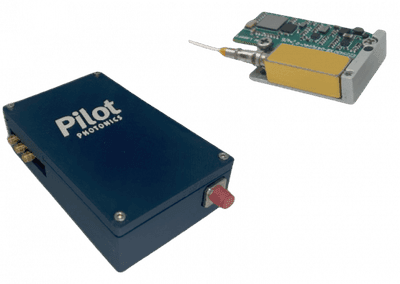
- Pilot Photonics Pilot Photonics makes lasers and optical comb sources for fiber networks and data centers. An optical comb is a laser that emits many evenly spaced wavelengths at once from a single device, so one source can replace many separate lasers. The company uses a gain-switched approach and builds monolithic III-V photonic chips. Its products include tunable lasers, an integrated comb laser assembly and ExCELS, an external laser source with up to 16 wavelength channels. Target uses include coherent transceivers, co-packaged optics, FMCW LiDAR and satellite communications. The company is described as a Dublin City University spinout. Photonic Computing EU funding (2025)
- Xscape Photonics Xscape Photonics develops lasers for the optical links that connect AI computing hardware in data centers. Most links use one laser per wavelength, or colour, of light. Xscape builds a single silicon photonics chip that produces many wavelengths at once, which lets one fibre carry more data. In March 2026 it launched FalconX, a pluggable laser module emitting up to eight wavelengths, and it also described a programmable multi-wavelength platform called ChromX. The company was founded in 2022 and is based in Fort Lee, New Jersey. Photonic Computing · Interconnect & Networking $37M Series A extension (March 2026, $81M total Series A)

- Lumai Lumai is building an optical AI accelerator that does matrix multiplication, the core arithmetic of neural networks, with beams of light travelling through three-dimensional free space instead of etched waveguides on a chip. The company argues this avoids scaling limits of integrated photonics. It spun out of the University of Oxford in 2022 and is based in Oxford, England. In April 2025 it announced more than 10 million dollars of venture funding in a round led by Constructor Capital. Performance claims, such as large efficiency gains over silicon, come from the company and are unverified. Photonic Computing $10M+ (April 2025, led by Constructor Capital)

- Lightelligence Lightelligence develops photonic products for AI systems, with two segments, optical interconnect and optical computing. Optical interconnect, which links chips using light, produces its current revenue, while optical computing, which does calculations with light, is a longer-term effort. Yichen Shen, who holds a physics PhD from MIT, founded the company in 2017. It listed on the Hong Kong stock exchange on 28 April 2026 under the code 1879, and filings name Shanghai Xizhi Technology as the operating company. Photonic Computing · Interconnect & Networking $210M+ Series C (2025); HKEX IPO April 2026 raised ~$322M

- ALAyar Labs Ayar Labs makes optical input and output for chips. Its TeraPHY chiplet is a small silicon photonics die that sits in the same package as a processor and sends data as light, and its SuperNova is a separate multi-wavelength laser source that feeds light to those chiplets over standard single-mode fibre. This replaces electrical links, which lose energy and range at high speeds. The company was founded in 2015 and describes its chiplets as compatible with the UCIe chiplet standard. Directories place its headquarters in San Jose, California. Photonic Computing · Interconnect & Networking $500M Series E (Mar 2026, led by Neuberger Berman; NVIDIA, AMD strategic)
- OpenLight OpenLight, based in Santa Barbara, California, offers a silicon photonics platform with lasers built into the chip. Silicon cannot easily emit light, so most designs attach separate laser parts. OpenLight instead bonds indium phosphide material onto silicon wafers, allowing lasers, modulators, amplifiers and detectors on one chip. Customers design with its process design kit, and it is validated at the foundry Tower Semiconductor. The technology traces to Aurrion, a UC Santa Barbara spinout that Juniper Networks bought in 2016. OpenLight targets 800G and 1.6T links for AI data centers. Photonic Computing · Interconnect & Networking $50M Series A-1 extension (Apr 2026, total $84M)

- Marvell Technology Marvell Technology designs semiconductors for data infrastructure, including custom silicon for cloud operators, electro-optics such as coherent DSPs, laser drivers and silicon photonics, and networking and storage chips. Its custom ASIC work lets data center customers build accelerators tailored to their own workloads. The company completed its acquisition of Celestial AI in February 2026, adding the Photonic Fabric optical interconnect for scale-up AI systems. Marvell is headquartered in Santa Clara, California. Photonic Computing · AI Accelerators · Interconnect & Networking $3.25B Celestial acquisition